Water Rights
Idaho water rights for property buyers: first in time, first in right
 Melissa Holm
· November 3, 2026 · 6 min read
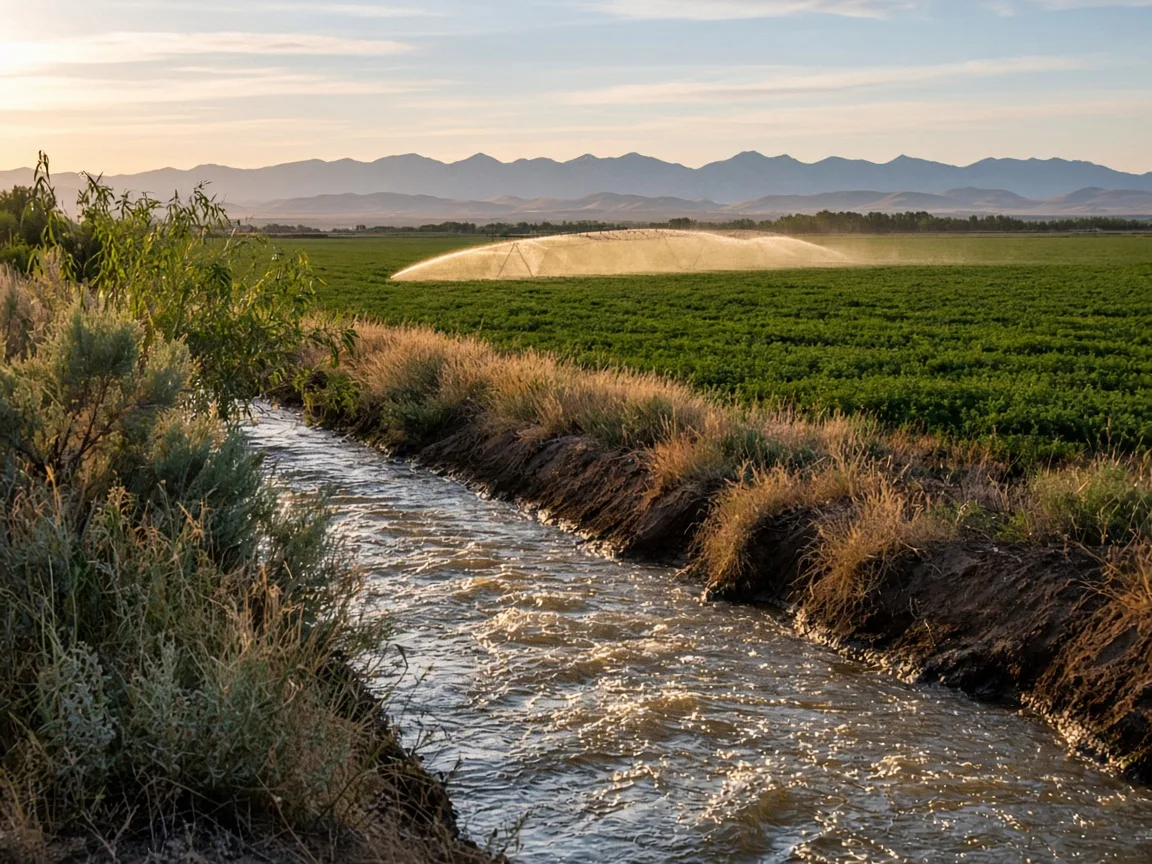
If you are buying irrigated farmland or a ranch with a stream, ditch, or well, water rights are part of the deal whether or not the price line shows them. In Idaho, the water in natural streams and groundwater belongs to the public and is managed by the Idaho Department of Water Resources (IDWR) under a doctrine called prior appropriation: first in time, first in right.
I am a farm and ranch agent in Idaho Falls, and I walk buyers through this before an offer goes in. This guide covers the basics so you know which records to check and which questions to ask.
What is a water right in Idaho?
A water right is a real property right attached to the use of water, not ownership of the water itself. It is established by diverting public water and putting it to a beneficial use, and that beneficial use is both the basis and the measure of the right. If the water is not used, part or all of the right can be lost through forfeiture.
When you read a water right record, four things matter most:
- Priority date: when the use first began, which decides who is served first in a shortage.
- Point of diversion: where the water is drawn, such as a well or a river call.
- Place of use: the legal description of the land the right serves.
- Amount and season: how much water, measured in acre-feet or cubic feet per second, and when it may be used.
Surface water and groundwater are managed together
Both surface water and groundwater are public waters in Idaho, and both run on prior appropriation (Idaho Code § 42-226). New wells generally require an IDWR permit, and existing groundwater rights carry priority dates just like surface rights. Because pumping groundwater can affect connected streams, IDWR administers the two together under conjunctive management.
That matters to buyers because a property's water picture is one system, not two. The well on the place may be tied to the same supply as the creek across the road.
Why a title report is not enough
Title insurance typically excludes water rights, so a clear title does not prove the water comes with the land. Buyers should not rely on the seller's word alone, either. The public record at IDWR is the source of truth, and it is worth a careful look before an offer.
How to verify a water right
The verification list is short, and every step is free or inexpensive:
- Search IDWR's Water Right Search tool (research.idwr.idaho.gov) for the right's number, priority date, point of diversion, place of use, and ownership.
- Ask IDWR staff to research the file if the online records are unclear.
- Make sure the purchase agreement references the water rights, including any held separately from the land.
- After closing, file the Notice of Change in Water Right Ownership (Idaho Code § 42-248) with IDWR, with a copy of the conveyance document, within 120 days of the change of ownership.
Appurtenant water rights generally pass with the land when the property transfers, but the deed and purchase agreement should still name them. Rights held separately need their own transfer paperwork.
Questions to ask before you make an offer
- Is the right appurtenant to the land, or is it held separately?
- Is the priority date old enough to survive a dry year?
- Is the full amount being put to use, or is part at risk of forfeiture?
- Are there canal company or irrigation district obligations, such as maintenance assessments or shares?
Bring your questions to me. I have walked the records on irrigated ground across Bonneville, Jefferson, Bingham, and Madison counties and can help you separate a solid water position from a risky one before you commit.
Melissa Holm
Farm & ranch agent · Hillside Realty, brokered by eXp Realty