Buyer's guide · Wells & water quality
What should I check about a well before buying rural property near Idaho Falls?
 Melissa Holm · Farm & ranch agent
· Updated November 3, 2026
The short answer
Short version: check the well's paper, its plumbing, and its water before you commit. That means confirming the well was drilled under a valid Idaho permit with the well log on file with IDWR, reading what the log says about depth, yield, and construction, running a pumping test, and sending the water to a certified lab for bacteria, nitrate, arsenic, and uranium. I live on a farm east of Idaho Falls, and I run through exactly these checks, plus the water right question, on every rural property I work with buyers on.
Start with the permit and the well log
Every well starts with paperwork, and the paperwork starts with IDWR, the Idaho Department of Water Resources. Idaho requires a well construction permit before any well is drilled, deepened, or altered (Idaho Code § 42-235), and after the hole is drilled the driller files a Well Driller's Report with IDWR. On the buying side, that report is the well's birth certificate: a public record you can pull at no charge.
The report, sometimes called the well log, records the well's depth and diameter, the geology the bit passed through, the depth to water, the tested flow, and the construction method. Those two documents, the permit and the log, are what you ask for first. If the seller cannot produce the well tag number and you cannot find the well in IDWR's Well Construction Search, that is a question to resolve, not a detail to skip.
Before an offer, confirm:
- The well has an IDWR well construction permit and the Driller's Report is on file.
- The well tag number and the legal description in the record match the property you are buying.
- The depth, flow, and construction in the log match what the seller describes.
- There are no abandoned wells on the property that were never properly decommissioned.
Flow rate and a pumping test
The number that matters most for a house is yield, measured in gallons per minute (GPM), and the well log usually states a tested rate. That tested rate was measured at drilling time, possibly decades ago, so a current pumping test is the honest check. A well contractor runs the pump for a set period, typically a few hours, while watching the static water level, the drawdown while pumping, and how fast the level recovers once the pump shuts off.
A household well in Eastern Idaho does not need to be a fire hose: a working domestic well usually produces a few gallons per minute, and the pressure tank smooths out the peaks, which is why many lenders want to see at least 3 to 5 GPM before they finance a rural purchase. The number you really want is the sustained rate in a dry stretch of summer, not the figure on a decades-old log. Ask whether the static level has dropped over the years and how the well behaved through the last serious drought.
Test the water with a certified lab
Idaho does not require a private well test at the time of sale, so testing is the buyer's job, and it is the cheapest due diligence on this list. The Idaho Department of Environmental Quality (DEQ) recommends testing private wells for bacteria and nitrate at least once a year, and for minerals such as arsenic, uranium, and fluoride every three to five years (DEQ wells guidance). Homes built before 1988 should also plan a lead check.
Eastern Idaho's groundwater has its own character. Naturally occurring arsenic and uranium show up in parts of the region, and nitrates from farming can reach shallow aquifers, so those three, plus total coliform bacteria, belong on your panel. DEQ names nitrate, bacteria, and arsenic among the most common groundwater contaminants in Idaho, which is why a bare mineral panel is not enough.
Send the sample to a lab certified for drinking water analysis, and hand the seller's old test results to the lab rather than trusting them. If a result comes back high, do not boil the water: boiling does not remove nitrate, arsenic, or uranium and can concentrate them. An elevated reading is often a treatment decision, a point-of-use filter or a whole-house system, rather than a reason to walk away. But you want that number before closing, not after.
Pump, pressure tank, and electrical system
A great well with a tired pump is a repair bill, so look at the working parts, not just the log. Ask when the pump was installed, whether it is submersible, and whether the pressure tank is sized for the house. A small tank on a house with good flow makes the pump cycle constantly, which wears it out years early.
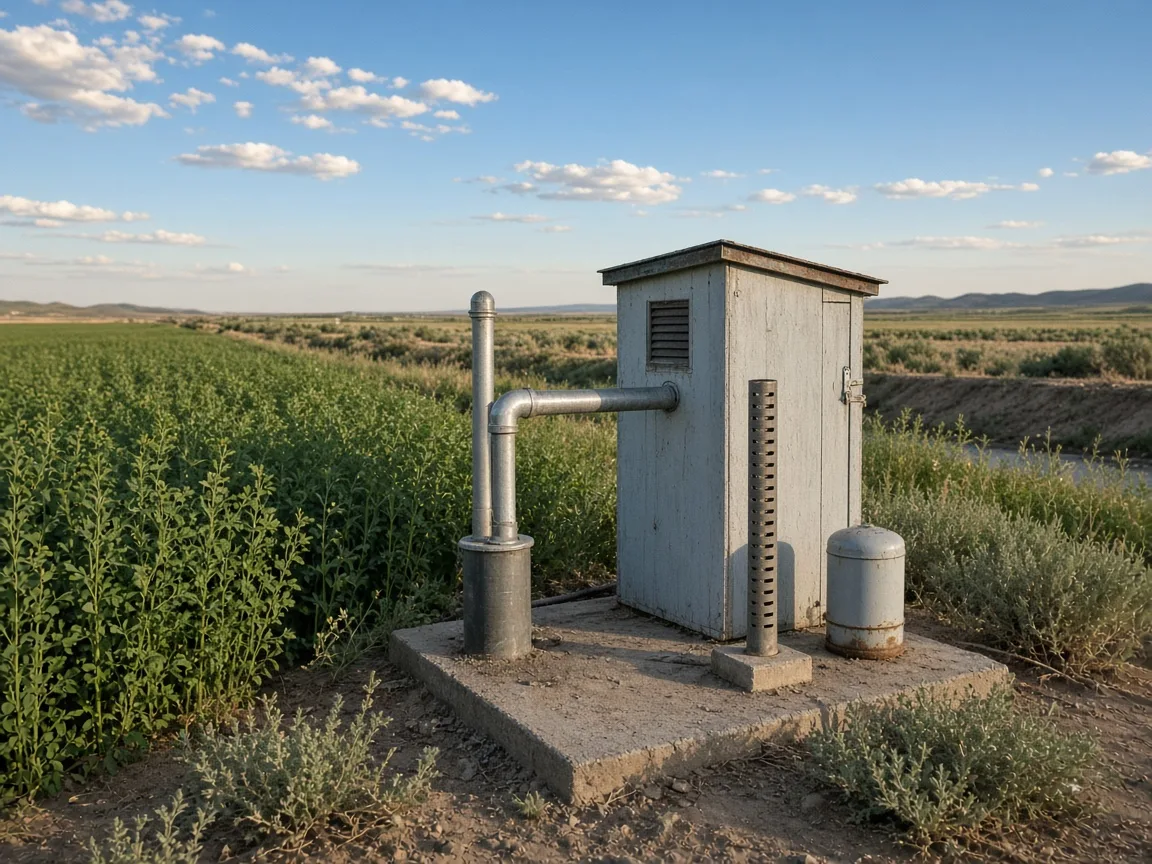
Have the pressure switch, wiring, and control box looked at, and inspect the wellhead: the conduit should be intact, wires protected, and the ground around the casing kept clear so surface water has no path down the borehole. A local well contractor installs and prices these parts every week, so an hour of their time before the offer is money well spent. The same visit covers the casing and seal checks below.
Casing and the annular seal
Construction standards exist to keep your drinking water from being someone's drainage. Idaho's well construction rules require the casing to stand above grade and the annular space between the casing and the borehole to be sealed with bentonite or cement grout, often to a depth of 38 feet or more, so surface water and shallow contamination cannot travel down the outside of the well. Where casing passes through rock, it must extend into and seal against the confining formation.
For a buyer the summary is simpler. Look at the wellhead with your own eyes: the casing should extend well above the ground, the cap should be secure, and the well should sit where water does not pond around it. An older well built before today's standards answers for what it was then, not what the rules demand now, so a licensed well contractor's inspection counts for more than any reassurance a seller can offer.
Yield and storage for the house and the garden
Think of the well as two systems: rate and storage. Yield is how fast the aquifer gives water, and the pressure tank provides storage so the pump does not run for every glass. For a house, a well producing a few gallons per minute with a properly sized tank serves a family fine. For irrigation, the math changes fast, because watering a lawn, garden, or field draws many gallons per minute for hours at a time.
So ask what this well will be asked to carry: the house alone, the house plus livestock, or the house plus irrigated acreage. Half an acre of garden sits comfortably inside the domestic exemption; anything larger is a water right question, which is the next section. Deciding what you want to water before you buy keeps the well from being the reason the property does not do what you planned.
The water right, or the exempt status
The well is a physical structure, but the legal water behind it is separate. Idaho exempts domestic wells from needing their own water right up to 13,000 gallons per day and half an acre of irrigation (Idaho Code § 42-111). A house, household animals, and a garden fit that definition. Irrigating real acreage, or supplying commercial use, does not, and it puts the well inside the groundwater rights system with its own permit, priority date, and place of use.
On IDWR's records you can confirm which of the two applies: the exempt domestic well or a permitted water right. Check the well file for the permit and construction history, then check the water right records for any right tied to the place. If the property is irrigated with groundwater, confirm the right is real, in good standing, and in the right name before closing. A few areas around Eastern Idaho sit in drilling moratoria or restricted basins for new groundwater appropriations, which matters if you plan to drill a second well or expand use; the IDWR permit office can confirm the status for the parcel's legal description.
None of this is meant to talk you out of well water. Most rural homes east of Idaho Falls run their whole lives on one, and plenty of old wells are excellent. The point of the list is to make sure the well you are inheriting is documented, adequate, and clean, so its condition becomes a fact you chose instead of a surprise you paid for.
Official sources
- IDWR: Wells overview
The program overview: a well construction permit is required before drilling or altering a well in Idaho.
- IDWR: Well Construction & Drilling
Permit information, licensed drillers, and the construction standards in IDWR's well construction rules.
- IDWR Well Construction Search (well log lookup)
Free public search by well tag number, legal description, address, or owner that returns the Driller's Report with depth, geology, water levels, flow, and construction details.
- Idaho Code § 42-235: Drilling permits
The statute requiring an IDWR permit before any well is constructed, deepened, or altered.
- Idaho Code § 42-111: Domestic purposes defined
The statute that defines domestic use and grounds the exempt well limits of 13,000 gallons per day and half an acre of irrigation.
- Idaho DEQ: Wells and private well testing
DEQ guidance on private wells: test annually for bacteria and nitrate, with arsenic, uranium, and other minerals on the longer schedule.
- Idaho DEQ: Information for the public (testing schedule)
The full recommended testing schedule for private well owners, including arsenic, uranium, fluoride, metals, and lead.
- Idaho Health & Welfare: Drinking water and private wells
State resources on private well testing, including free or low-cost testing opportunities while funding lasts.
Rules and office details change, so double-check the facts that matter for your property with the office named before you rely on them.