Buyer's guide · Water rights & irrigation
What's the difference between a water right and canal company shares?
 Melissa Holm · Farm & ranch agent
· Updated November 3, 2026
The short answer
In plain terms, a water right is the state-recorded legal right to use a specific amount of public water, and the Idaho Department of Water Resources (IDWR) is the agency that documents and tracks it. Canal company shares are ownership in a private irrigation company that give you the right to receive water delivered through its ditches and laterals. On most irrigated farms in Eastern Idaho you deal with both, so the real question is how they fit together and what you need to verify before you buy.
What a water right is in Idaho
The water in Idaho's rivers, streams, and aquifers belongs to the public, not to any landowner. A water right is the legal right to use some of that water, and Idaho awards it under prior appropriation: first in time, first in right (Idaho Code § 42-226). The right is real property, and it is tied to the use, not to the water itself. You hold the right to use a measured amount of water, in a defined place, in a defined season, and you can lose part or all of it if the water stops being put to beneficial use.
The Idaho Department of Water Resources (IDWR) documents and tracks every right. Each one carries a water right number, a priority date, the source (a stream, a canal, or an aquifer), the quantity, the point of diversion, the place of use, the season, and the owner. Rights completed through the permit process become licenses; rights settled through a court adjudication become decrees.
Most of Eastern Idaho's water rights sit in the Snake River Basin Adjudication, which began in 1987 and produced more than 158,000 decrees, with the Final Unified Decree signed in 2014. In practical terms, if you are buying irrigated land near Idaho Falls, the water right for it almost certainly has a water right number and a decree or claim status on the IDWR record.
What canal company shares are
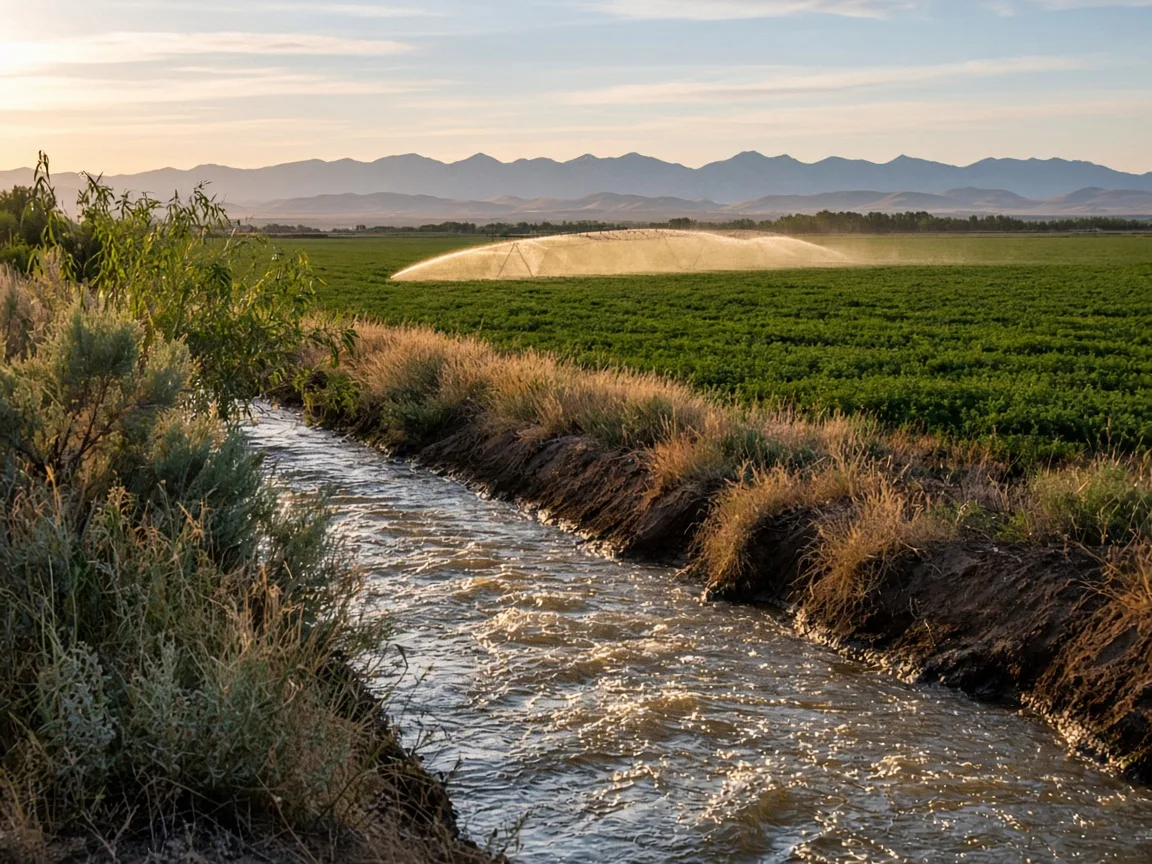
A canal company, sometimes called an irrigation company, is a private corporation organized to furnish water to its shareholders, not to make a profit (Idaho Code § 42-2201). The company holds the water rights for the system, and it delivers water to shareholders through its ditches and laterals. When you buy shares in the company, you buy the right to receive a proportional share of whatever water the company's rights make available.
Shares are personal property, and the stock certificate is the evidence of your title. They transfer like any corporate stock: the seller endorses the certificate, and the transfer is registered on the company's books (Idaho Code § 42-2507). The company's bylaws and delivery practices govern what the shares mean day to day, including how much of the water goes to your acreage, when it runs, and what you pay in annual assessments to keep the system running.
The practical difference
Here is the difference in one line: a water right is the state-recorded legal entitlement to the water, and canal shares are private ownership in the company that delivers it.
- A water right is real property recorded at IDWR. It describes the water itself: how much, from where, when, and for what land.
- Canal shares are personal property recorded on the company's books. They describe your standing among shareholders: what share of the company's water your land gets, and what you owe to keep the ditches working.
- Shares are privately held and transfer with the stock certificate, registered on the company's books, not through IDWR paperwork.
- Shares are subject to the canal company's bylaws and delivery practices. The company decides how calls are placed, when water runs, and how assessments are billed, within the limits of its water rights.
- The company's water rights show up on IDWR records. Your shares do not.
How water rights and canal shares work together on an Eastern Idaho farm or ranch
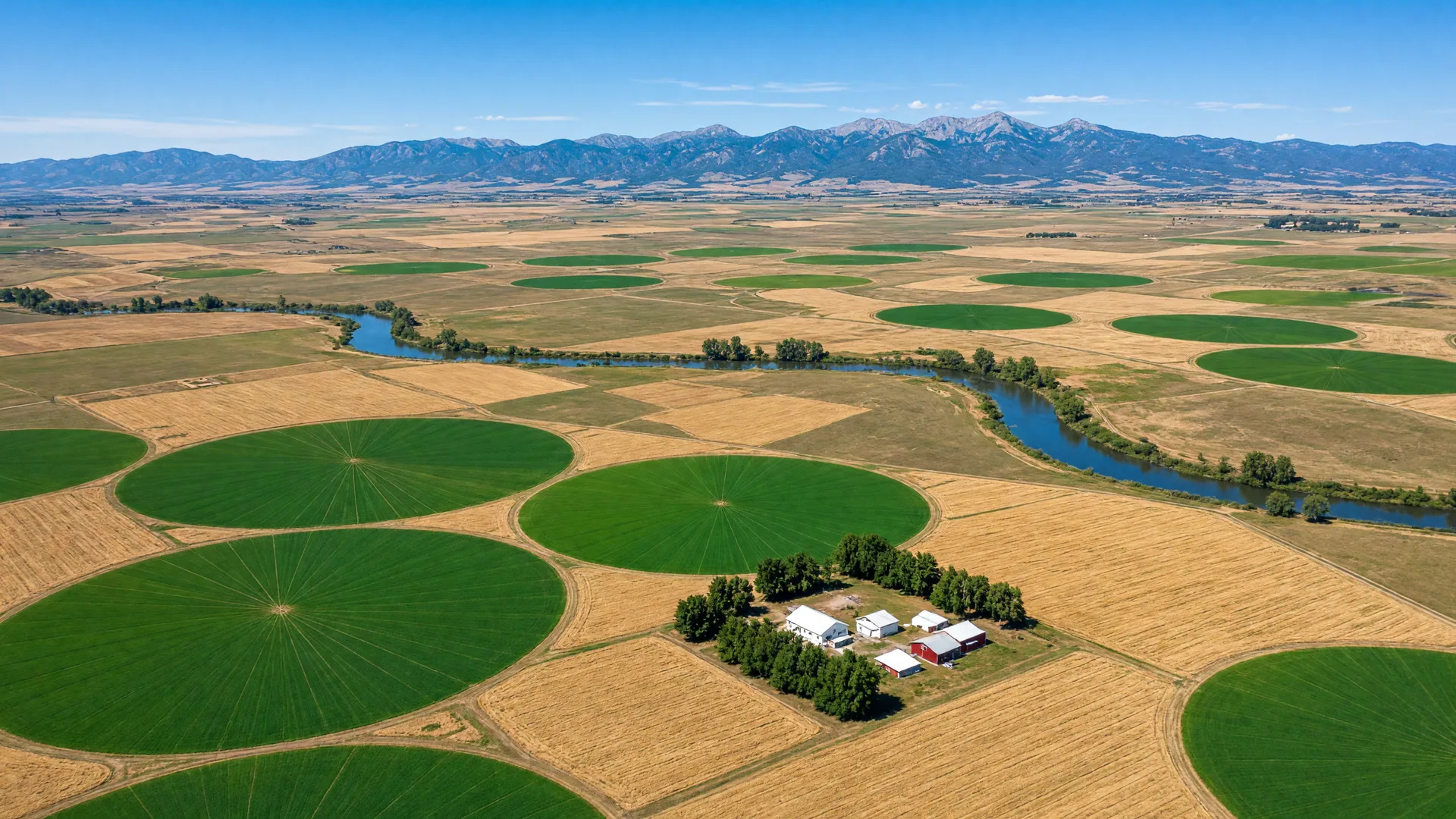
Here is how it plays out on a typical irrigated farm east of Idaho Falls. The land sits in a ditch system run by a canal company, and the company holds the water rights that serve the system, most of them decreed in the Snake River Basin Adjudication. When you buy the farm, you also buy the canal company shares that are appurtenant to the land. Those shares are your seat at the table: they tell the company how much of its water your acreage is entitled to, and they come with an assessment obligation that helps pay for keeping the ditches running.
The water right and the shares do different jobs. The right says the company may divert so much water from the river or reservoir with a given priority date. The shares say that among the company's shareholders, your land is entitled to its proportional share of whatever water is available. In a full water year both are easy to ignore. In a dry year, the priority date and the company's delivery rules decide who gets what, and when.
That is why I check both on every irrigated deal. The IDWR record tells me the company's rights are real and decreed. The company's ledger tells me the shares actually attach to the land you are buying and that the seller is the registered holder. Buyers who check only one end up with surprises at closing, or worse, in August.
Due diligence before you close
Here is the path I walk with buyers, in order, with the seller, the canal company, the title company, and the IDWR records:
- 1
Start with the seller. Ask for the water right number or numbers for the property and the canal company stock certificate. Write down the company name, the share count, and what the seller paid in assessments over the last couple of years.
- 2
Call the canal company. Confirm the seller is the registered holder, the shares are in good standing, and no assessments are past due. Ask how a transfer works, whether the board must approve a new owner, and what the bylaws say about shares moving with the land.
- 3
Ask the title company in writing. Title insurance generally excludes water rights, and the county title record rarely shows them. A clean title does not prove the water comes with the land, so ask what the commitment does and does not cover.
- 4
Pull the IDWR records. Search the Water Right Search tool by the property's legal description and by the canal company's name. Confirm each right's source, priority date, quantity, and decree status in the Snake River Basin Adjudication.
- 5
Write it into the contract. Make the purchase agreement state that the canal shares, and any separately held water rights, pass with the land.
- 6
Close the loop after closing. Have the shares endorsed and registered to you on the company's books, and file IDWR's ownership change paperwork if a right transfers to you directly.
Every step is cheap compared with discovering the water problem after you own it. I do this on every irrigated deal I work, and I am glad to walk it with you on the place you are considering.
Official sources
- IDWR: About water rights
The overview explains how water rights work and links every official search tool.
- IDWR Water Right Search
Search by water right number, legal description, or owner to pull the right, priority date, point of diversion, and place of use.
- IDWR: Snake River Basin Adjudication (SRBA)
How the court process decreed most of Eastern Idaho's water rights, including the canal companies' rights.
- IDWR: Water District 01 accounting
How the upper Snake basin accounts for water use and curtails junior rights in dry years.
- Idaho Code § 42-2201: Mutual irrigation companies
The statute that defines irrigation companies organized to furnish water to their shareholders.
- Idaho Code § 55-617: Water entitlements pass with the land
The statute that passes water entitlements and assessment obligations to the buyer with the land.
Rules and office details change, so double-check the facts that matter for your property with the office named before you rely on them.